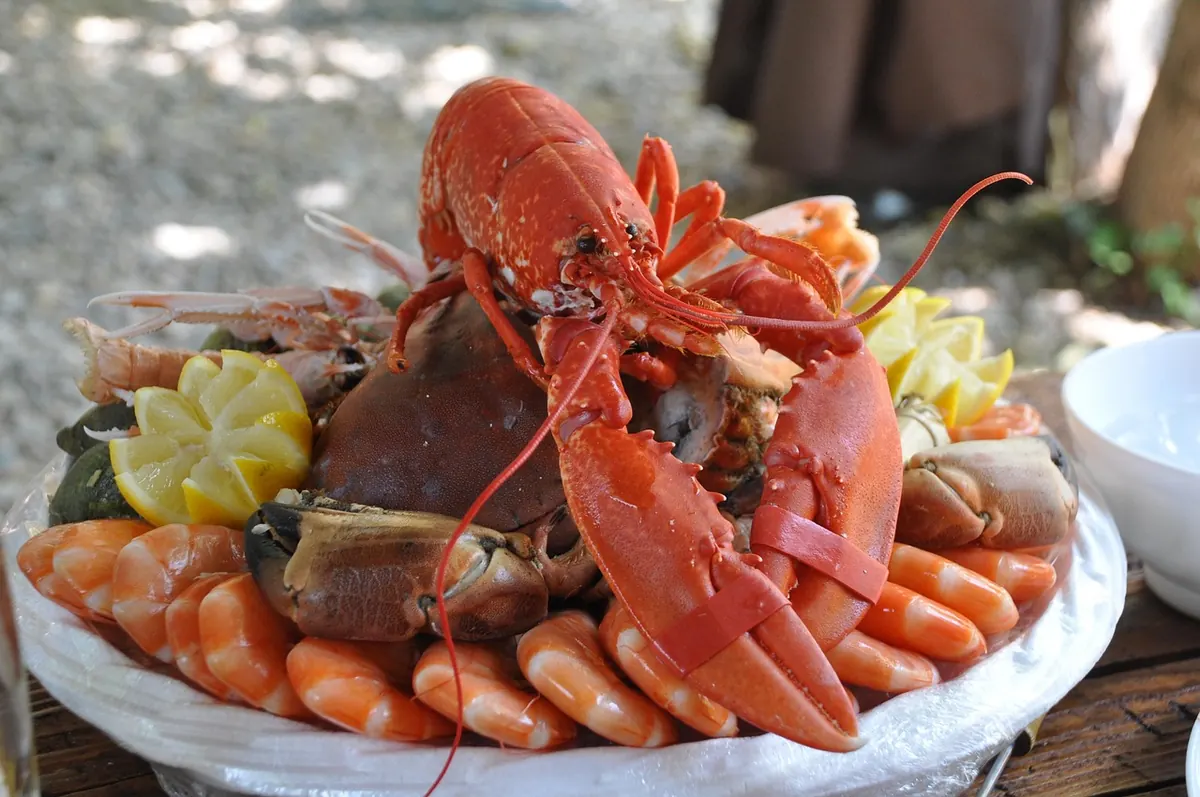
Norfolk food is not fancy. It is a crab boiled and picked the same day, samphire cut from the marsh at Thornham, a suet dumpling dropped into the stew, a pint brewed a few miles down the road. The county's kitchen has always been built on what was closest: the North Sea, the salt marshes, the pig, the apple, the barley field.
Here is a checklist of ten traditional dishes to work through, with notes on when each one is at its best and where to look for it. Three or four are easy in a long weekend. All ten take a year, because half of them have a season measured in weeks.
Start on the Coast: Crab, Cockles and Mussels
Cromer crab
The crab landed at Cromer is brown crab, pulled from the chalk reef that runs along the north coast. It is sweeter and nuttier than most, which is why the town has built a small identity around it. The classic way to eat it is dressed: white meat on one side, brown on the other, with bread and butter, a lemon wedge and a grind of pepper. Don't ask for mayonnaise stirred through it. Buy one from a fishmonger in Cromer or Sheringham, or order a crab sandwich in a pub with a sea view — the plain version is almost always the better one. Crab is landed mainly through the warmer months; dressed and frozen crab keeps the trade going outside them.
Stiffkey Blues
Cockles from the Stiffkey marshes come up with a blue-grey shell, coloured by the silt they grow in. They are small, sweet and traditionally served potted, or simply with vinegar and white pepper. Look for them at coastal fishmongers and food festivals; they are a treat rather than an everyday buy.
Brancaster mussels
Rope-grown in the creeks around Brancaster Staithe, these are plump, clean and rarely gritty, and they are at their best in the cooler half of the year. Order them steamed with shallots and cider in a pub within sight of the harbour, with bread to mop up afterwards.
Samphire: A Season Measured in Weeks
Marsh samphire grows on the salt marshes between Thornham, Brancaster, Stiffkey and Blakeney, and the local crop is one of the best reasons to visit Norfolk in summer. It appears from roughly late June and is gone by the end of August. Look for bright, springy green stems that snap when you bend them. If they are limp or brown, walk away.
Cooking it takes about three minutes. Rinse it well in cold water, drop it into boiling water or a steamer, and take it out while it still has bite. Serve it with butter and a squeeze of lemon, or a splash of vinegar. It is already salty, so taste before you season. Local cooks also use it raw, tossed through a salad, and it sits happily next to crab, mussels and grilled fish.
Buy it from fishmongers, delis, farm shops and the roadside stalls that appear along the coast road in high summer.
Suet, Sausage and the Norfolk Dumpling
Norfolk dumplings are suet dumplings, boiled on top of a stew or around a joint, and they are the reason people from the county are still occasionally called Norfolk dumplings. Made from flour, suet, water and a pinch of salt, they are heavy in the best way, and they soak up gravy like nothing else.
The richer cousin is the Norfolk Plough Pudding: a suet crust filled with sausage meat, bacon, onion and sage, steamed in a cloth and traditionally eaten around Plough Monday, the first Monday after Twelfth Night. It turns up on specials boards in traditional pubs and in butchers' shops in winter. Ask for a slice with mustard and something green alongside.
Order dumplings with a roast in a country pub, or make them at home — ten minutes to mix, twenty to cook. For the full experience, look for a Norfolk Black turkey at Christmas, a historic breed raised by smallholders and worth ordering ahead from a farm shop.
Smoke and Salt: The Yarmouth Bloater
Great Yarmouth was built on herring, and the bloater is the dish that came out of it: a whole herring, lightly salted, then cold-smoked so the flesh stays soft rather than cooked through. Traditionally it was grilled and eaten at breakfast, often with bread and butter.
Bloaters are not easy to find now. Ask a fishmonger, particularly on the coast, or look for them at food festivals and smokehouses that still cure herring. If you cannot track one down, a kipper or a hot-smoked herring gives you a sense of the tradition, though not the same thing. Eat it simply: grilled, with lemon, black pepper and bread.
The Dairy, the Orchard and the Brewery
Along the coast you eat the sea; inland you eat the farm. Binham Blue, made at Wighton in north Norfolk, is a soft blue with a proper bite. Buy it from a deli in Holt or Burnham Market, or from a farmers' market stall, and let it come up to room temperature before you eat it. Other local cheeses turn up on the same counters.
Norfolk Punch, a spiced apple and herb drink, is traditionally warmed through in winter. Woodforde's Wherry, brewed at Woodbastwick, is the county's everyday bitter — order a pint with a ploughman's and you have most of Norfolk on one table. Colman's mustard has been part of Norwich's story since the early 1800s.
The Ten-Dish Checklist
- Cromer crab, dressed, with brown bread and butter.
- Brancaster mussels, steamed with shallots and cider.
- Stiffkey Blues cockles, with vinegar and white pepper.
- Marsh samphire, steamed and buttered (late June to August).
- Norfolk dumplings, with a roast or a stew.
- Plough Pudding, sliced, with mustard (winter).
- A Yarmouth bloater, grilled for breakfast.
- Binham Blue, at room temperature.
- Norfolk Black turkey, at Christmas.
- A pint of Wherry with a ploughman's, and a warmed Norfolk Punch.
Making a Weekend of It
Base yourself in Cromer or Wells-next-the-Sea if you want the coast on foot, or in Norwich if you would rather do markets, delis and pubs, with a day trip out to the shore. A practical order of play:
- Eat crab and samphire in summer; eat mussels, cockles and smoked herring in the colder half of the year.
- Buy from the counter rather than the chiller cabinet where you can, and ask the fishmonger what came in that morning.
- Ask whoever is selling it how they cook it. In Norfolk, that answer is usually short.
- Book a table for Sunday lunch in a village pub if you want dumplings without the washing up.
- Order Plough Pudding and Norfolk Black turkey ahead if you are visiting in January or at Christmas.
One last note: shellfish is the backbone of this list, and crab, mussels and cockles are often handled in the same small kitchens. If you have an allergy, say so clearly when you order. Otherwise, take your time, keep it simple, and let the ingredients do the work.
Photo: NadineDoerle / Pixabay